Saturday, May 11, 2013

Outline for Research Paper


Thesis:  Lincoln’s decisions to lead the nation into Civil War and issue the Emancipation Proclamation were direct results of his idea of a “political religion” and his view of Christianity. 

Outline:

I. Introduction

II. Lincoln’s view of religion and an investigation of his personal faith.

III. How Lincoln’s views of religion and government combine to make the idea of “political religion” and how this idea led Lincoln to engage the Confederacy in war. 

IV. An examination of how Abraham Lincoln viewed Blacks and slavery throughout his political career. I will conclude this section by explaining the role that Christianity and political/military necessities played in Lincoln’s decision to issue the Emancipation Proclamation.

V. Conclusion

Tuesday, May 7, 2013

Works Cited for Blog Post 4 #1


                                                Bibliography


1.Bouton, Archibald L. Lincoln and Douglas Debates  (New York: Henry Holt and Company, 1905),


2.  Cuomo, Mario M., and Holzer, Harold ed. Lincoln on Democracy (New York: Cornelia & Michael Bessie, 1990),


3. Guelzo, Allen C. Lincoln’s Emancipation Proclamation: The End of Slavery in America. (New York:  Simon & Schuster, 2004),


4. Leidner, Gordon, Lincoln on God and Country (Shippensburg: White Mane Books, 2000),


5. Simon, John, Holzer Harold, and Vogel Dawn ed. Lincoln Revisited (New York: Fordham University Press, 2007),


Thursday, May 2, 2013

Selection of Research Topic

After doing research on three possible topics for my research paper, I have decided to focus on Abraham Lincoln's personal beliefs and the role that these beliefs played in the cause of the Civil War and in the issuing of the Emancipation Proclamation. My revised sentence description is,
"I will be writing about the role that Abraham Lincoln's personal beliefs played in the beginning of the Civil War and the issuing of the Emancipation Proclamation." My research questions will remain the same with the addition of one question. I will be asking, "Why did Abraham Lincoln have such a great desire to preserve the Union?" "Was Abraham Lincoln a Christian?" "Did he desire equal rights for black slaves, or just their emancipation?" "Was the Emancipation Proclamation created as a political move, as a strategic military move, or was it created because it was the right thing to do?" I selected this topic because I have heard a lot of different things about Abraham Lincoln and I want to know more about him. I have heard that Lincoln was a racist, and from others that he was anti-racism. I have heard that his only motivations were for political power and I from others that he was a hero that wanted to save the enslaved and the Union from the evil Confederates. I simply want to know whether Abraham Lincoln's actions came from virtue or selfish desire. I also could find a lot of information about Abraham Lincoln, the Civil War, and the Emancipation Proclamation.  

As I mentioned earlier, I have heard both negative and positive things about Abraham Lincoln. From what I can remember of my public education, Abraham Lincoln was portrayed as a hero who saved the slaves and prevented the nation from fragmenting. I do not remember learning much that was negative about him. I have also learned that the Civil War was fought almost exclusively over the issue of slavery. I do not think that I am severely influenced one way or another. I would prefer to find that Abraham Lincoln was this virtuous President to be emulated, but I would not be surprised if he was not as virtuous as he is sometimes made out to have been.  To neutralize this preference, I will acknowledge that it is a very real possibility that Abraham Lincoln did many things from selfish motivations. I am aware that it is a rare politician who does things purely from a moral point of view.

Wednesday, May 1, 2013

Description of Sources for Possible Paper Topics

Concerning Topic 1. The role that Abraham Lincoln's personal beliefs played in the beginning of the Civil War and the policies that he enacted during the war. I found five sources concerning this topic. I have provided proper citation below. I have also discussed what each source contains and the value of each source to my topic and whether they have changed my questions or approach to this topic.


Bouton, Archibald L. Lincoln and Douglas Debates. New York: Henry Holt and Company, 1905. Print. 


This is a collection of the debates between Abraham Lincoln and Stephen Douglas during the Senatorial Campaign of 1858. This particular book also includes Lincoln’s address at Cooper Institute. This is a primary source that will help me learn some of Abraham’s Lincoln's personal beliefs and stances on major political issues of that time.This primary source is important to me because it will help me determine what Abraham Lincoln's personal beliefs were before the Civil War. It will particularly help me identify what his stances on public policy were. All in all, I think that this primary source is a very important piece of research for this topic.


Cuomo, Mario M., and Holzer, Harold Eds. Lincoln on Democracy: New York: Cornelia & Michael Bessie, 1990. Print.


This book is a compilation of Abraham’s public speeches and writings with a focus on democracy. I hope to use this source to better learn what Abraham’s political and religious beliefs were. This may help me understand why the South reacted so negatively to Lincoln’s election, why Lincoln cared so much for keeping a unified nation, and why he created the Emancipation Proclamation. This source is important to helping me answer the question of how Abraham Lincoln's personal beliefs led to the beginning of the Civil War. This source is also important to my topic. 


Guelzo, Allen C. Lincoln’s Emancipation Proclamation: The End of Slavery in America, New York: Simon & Schuster, 2004. Print.


This book examines the Emancipation Proclamation and Lincoln’s motivations for passing it. It also discusses the impact that this Proclamation had on America. I hope that this book will help me better understand  Lincoln’s motivations for creating and passing the Emancipation Proclamation. This source is also important to my research of this topic.


Leidner, Gordon, Lincoln on God and Country, Shippensburg: White Mane Books, 2000. Print.


This book discusses who Abraham Lincoln was by providing pieces from various speeches and writings that Abraham Lincoln made. These speeches and writings cover a variety of topics. These speeches and writings of Lincoln will help me better understand Lincoln's personal beliefs. Of primary importance to me is chapter 8 that discusses Lincolns faith in God.This chapter specifically addresses my question concerning whether or not Abraham Lincoln was a Christian or not. This source is important for my research of this topic.


Simon, John, Holzer Harold, and Vogel Ed.., Dawn Lincoln Revisited, New York: Fordham University Press, 2007. Print.


In this book, several historians examine many different aspects of Lincoln’s life. Of particular interest to me, these authors discuss Lincoln’s religious and political views. I am also very interested in the examination of Lincoln’s policies towards Blacks after the Emancipation Proclamation that occurs in chapter 13. This source will help me answer my questions about how Abraham Lincoln viewed African Americans. This is also an important piece of research for my topic.


 All in all, I think that my questions could remain the same. These sources address my questions well. As, for my topic I would change it to "I will be writing about the role that Abraham Lincoln's personal beliefs played in the beginning of the Civil War and the issuing of the Emancipation Proclamation."  This revised sentence description of my topic will help me narrow my topic.


Concerning Topic 2. Why did the Confederates felt that their cause of succession and slavery was the right and noble path during the Civil War? I found three good sources for this topic. I have provided proper citation below. I have also explained why these sources were important for this topic. 


Faust, Drew G. The Creation of Confederate Nationalism: Ideology and Identity in the Civil War 
South, Baton Rouge: Louisiana State University Press, 1988. Print.

This book discusses the ideology of the Confederated States of America. It explores the development of it's ideology and the nationalism that resulted from this ideology. I would use this source to answer my question about how the Confederates could think that they were on the moral side in the war. This source is important to my topic.

Gallagher, Gary W. Ed. Fighting for the Confederacy: The Personal Recollections of General Edward Porter Alexander. Chapel Hill: The University of North Carolina Press, 1989. Print.

This is a compilation of personal writings by Brigadier General Edward Porter who fought for the Confederacy. This primary source will help me understand the mentality of the Confederate military and why the South thought that rebelling was a just and noble cause.This primary source will defiantly help me address my major question that forms the foundation for this topic. This source is very valuable.


Masur, Louis P. Civil War : A Concise History. [N.p.]: Oxford University Press, 2011. eBook Collection (EBSCOhost). Web. 30 Apr. 2013.


This book discuses the coarse of the Civil War. I am only interested in the first chapter, which discusses the origins of the Civil War. It reviews events as far back as the development of the US Constitution. The information that I gather from this chapter will help me to identify some of the ideology that encouraged the south to rebel against the Union. It will also help me to understand why the South felt that they were just in rebelling.

Overall, there were fewer sources for this topic. It is hard to find resources that come from a Confederate perspective. I would guess that this is simply because the Confederacy was defeated in the Civil War, so Confederate sympathizers were ashamed to write their history. I think that these sources will help me answer my first two questions, but my third question is not addressed. I could not find anything about whether the South planned to have slaves forever or just for a time. Considering the sources that I found, I do not think that I would have to change my sentence description at all.


Concerning Topic 3. The role that African Americans played in the Union victory over the Confederacy. I found four good sources for this topic. I have provided the proper citation below. I have also explained why each source is important for this topic.


 Boritt, Gabor S. Why the Confederacy Lost, Oxford University Press, New York, 1992. Print.

As the title suggests, this book discusses the factors that led the Union to victory. The only part of this book that I am interested in is Chapter 5, which discusses the role that African-Americans played in the Union victory.This directly addresses my topic and is a very important piece of research.


McPherson James M. The Negro’s Civil War: How American Negroes Felt and Acted During the War for the Union. New York:  Pantheon Books,  1965. Print.


This source makes use of several primary source documents. However it uses excerpts from these sources rather than the entire document. “The book is arranged in narrative form, with considerable interpretive and factual information supplied by the editor to bridge and clarify the documents.” (McPherson xi) The book relies on the actual words of African Americans to describe all aspects of their role in the Civil War. This primary source will help me understand how African Americans helped the Union to win the Civil War. It is especially important that this information is coming directly from African Americans who helped the Union during the Civil War.


Corydon Ireland. Black Confederates. Harvard University, 1 Sept. 2011. Web. 30 April. 2013. http://news.harvard.edu/gazette/story/2011/09/black-confederates/


This source discusses how there were African Americans who fought for the Confederacy. (Though this was a very low number.) It discusses why African American’s may have fought for the Confederacy and the controversy that this idea causes. This article directly addresses my question about whether or not slaves fought for the Confederacy. This source is a very important part of my research.


Quarles, Benjamin. The Negro in the Civil War. Boston: Little, Brown and Company, 1953. Print.


This book discuses the role that African Americans played in the Civil War. It discusses how their actions in the Civil War were important for a Union victory in the Civil War. This source directly addresses my topic.


 Rose, P. K. Black Dispatches: Black American Contributions to Union Intelligence During the Civil War. Central Intelligence Agency, 7 July. 2008. Web. 30 April. 2013. https://www.cia.gov/library/center-for-the-study-of-intelligence/csi-publications/books-and-monographs/black-dispatches/index.html


This source discusses how many African Americans in the South helped the North during the Civil War. It briefly discusses several African Americans and how they helped the Union cause.This source directly addresses my first two questions concerning how African Americans helped the Union. This source is very important to my topic.


 All in all, I found several good sources for this topic. All of my questions are addressed and I do not think that I need to change my sentence description.


Friday, April 19, 2013

Possible Paper Topics

1. One topic that I could research is the role that Abraham Lincoln's personal beliefs played in the beginning of the Civil War. I am also interested in the federal policies that Lincoln enacted during the war.

Questions concerning this topic:

Was Abraham Lincoln a Christian?
Did he desire equal rights for black slaves, or just their emancipation?
Was the Emancipation Proclamation created as a political move, as a strategic military move, or was it created because it was the right thing to do?

2. I could also research why the Confederates felt that their cause of succession and slavery was the right and noble path during the Civil War. This would help me explain why the Confederate Army was so willing to fight and die for a cause that we now view as abhorrent.

Questions concerning this topic:

How could the Confederates view their cause as being noble?
If so, did this make them more dedicated soldiers?
Did the Confederates plan to have slavery instituted in their new nation forever?

3. A third topic that I could research is the role that African Americans played in the Union victory over the Confederacy.

Questions concerning this topic:

How many African Americans fought for the Union, and what were their roles in the army?

Did any slaves in the Confederacy do anything to damage the Confederate cause? If so what did they do?

Were their any slaves who fought for the Confederacy? Why or why not?


Friday, April 5, 2013

Interpretation of Primary Sources

From www.smithsonianmag.com
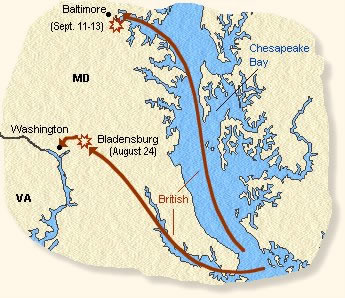
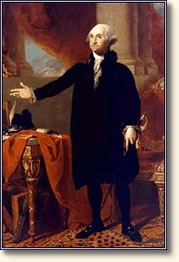
I have researched two primary sources concerning the burning of Washington in 1814. One of these sources is a letter by Dolly Madison to her sister concerning the days and hours just prior to her fleeing the White House as a result of the British advance on Washington. My second primary source is a diary entry by George Gleig who "was part of the British force that attacked and burned Washington." ("The British Burn Washington D.C, 1814" EyeWitness to History.com) Both of these primary sources provide valuable detailed information about the burning of Washington. Dolly Madison's letter explains how she saved some Cabinet papers, the painting of George Washington, and other valuables from the White House before the British got there and sacked the place. The letter by George Gleig also gives us valuable information about what was destroyed by the British in their sacking of Washington. However, the most valuable historical information that these sources give us are the mood and mentality of both the Americans and the British before, and during the burning of Washington. We can see that the American mood was unconcerned arrogance toward the idea that the British would or could attack and sack Washington. This mood changed to fear and horror when the British began to approach Washington after the battle of Bladensburg. On the other hand, we can see that the British were confident, but annoyed at the fighting style of the Americans. We can also see that they were jubilant at the burning of Washington. 

The mood that I have drawn from these sources is supported by Jon Latimer in 1812 War with America. In chapter 14, Latimer discusses the burning of Washington from a British perspective.  The British mood of confidence is best exhibited by Cockburn (admiral and colonel of the Royal Marines) who proposed and led the attack on Washington. In a private letter Cockburn says, "I most firmly believe that within forty-eight Hours after the Arrival in the Patuxent...the City of Washington might be possessed without Difficulty or Opposition." (Latimer 303) The Americans were also confident of their own safety. "Although British forces had threatened Washington through much of 1813, the American government took no effective action to fortify or defend the capital in the spring of 1814." (303) The Americans believed that the British would not spend the resources to attack Washington because Baltimore was much more valuable militarily. Latimer mentions several cases where the British were angered at the American's approach to war. They were angry about attempted poisonings (305), torpedoes/submarines (306), and snipers shooting from houses (316). This frustration no doubt contributed to the British pleasure during the destruction of Washington. While Latimer notes that not every British soldier was happy at the destruction of Washington, there were many who were. This is especially evident in Latimer's discussion of how the British invaded the White House, joyously feasted on the American celebratory dinner, tried fine wines, and even took time to change clothes before burning the White House (318-319). Latimer also makes mention of the horror and fear that the Americans felt at the advance of the British and the burning of Washington. The Americans crippling panic is best described by Latimer when he recounts the American defeat at Bladensburg. Just after the British crossed the river, American militia men began retreating and fleeing in utter abandonment. (314-315) On page 318, Latimer recounts the horror that many Americans felt at the burning of Washington. One American, Mordecai Boots writes, "so repugnant to my feelings, so dishonorable, so degrading to the American character and at the same time so awful it almost palsied my faculties." (318)
The mood of both the British and the Americans during this whole conflict over Washington are well exhibited in the primary sources that I have selected. In Dolly Madison's letter, we first see the American overconfidence and sense of security in the first paragraph where President Madison asks Dolly if she has the courage to stay in the White House until he returns. Dolly's response is that, "I had no fear but for him, and the success of our army." I interpret this to mean that she was afraid for James Madison's safety at Bladensburg, but did not really worry about the threat of the British actually making it to Washington. However, this confidence is destroyed by James Madison's letters informing Dolly to be ready to leave Washington because the British were stronger than had been originally thought. Dolly is then frightened and documents how on Wednesday she had been looking with her spy-glass for her husband and his friends "with unwearied anxiety" since daybreak. When her husband does not arrive and the British approach nearer to Washington, Dolly frantically stores Cabinet papers, the now famous painting of George Washington, and other valuables from the White House. She then flees the White House with a fearful uncertainty.
From www.dipity.com
In the diary entries of George Gleig, the British confidence (at this point it is very justified) is portrayed with General Ross' attempt at a truce when the British first approach Washington. However, the Americans shove this truce back in Ross' face by shooting at him and the soldiers that accompany him. Gleig then documents that the British view this as yet another "breach of the law of nations" by the Americans. This caused the British to lay "all thoughts of accommodation...aside." Gleig then joyfully documents the burning of the governmental buildings of Washington. He says, "You can conceive nothing finer than the sight which met them as they drew near to the town. The sky was brilliantly illuminated by the different conflagrations, and a dark red light was thrown upon the road, sufficient to permit each man to view distinctly his comrade's face." Glieg also documents the joyous feast of the British at the White House before they burned it. As we can see, these two primary sources by George Gleig and Dolly Madison do a great job at relaying the mood of both the British and Americans immediately before, during, and after the burning of Washington.


Sources:

 "The British Burn Washington, DC, 1814," EyeWitness to History, eyewitnesstohistory.com (2003).

"Dolley Madison Flees the White House, 1814" EyeWitness to History, www.eyewitnesstohistory.com (2009).

Latimer, Jon. 1812 War with America. Cambridge: The Belknap Press of Harvard University Press, 
2007. Print.

Monday, April 1, 2013

Investigation Using a Secondary Source

I have two primary sources from EyeWitness to History.com. One of these primary sources is a letter by Dolly Madison to her sister about the moments just prior to the British taking the White House. I have several questions about this source. First of all, I wonder if this is one letter or multiple letters. EyeWitness to History.com seems to indicate that this is one letter. However, the letter is broken into three time frames. 1. The day after President Madison left to join General Winder, 2. "Wednesday Morning, twelve o'clock," and 3. Wednesday at Three o' clock. This could indicate that this letter is actually multiple letters. However, I can see how Dolly could have written about three different times all within the same letter; especially if she is writing to her sister years after the fact with the purpose of recounting the events leading up to the British capture of the White House. This leads me to my next question.When was this letter written? The letter itself indicates that it was written just before the British attacked and took the White House. Dolly Madison begins the letter with, "My husband left me yesterday morning to join General Winder." The rest of the first part of this letter (the next four paragraphs) is written in the present tense indicating that it was written the day after President Madison left to join General Winder. The second part of the letter occurs on "Wednesday at 12 o'clock." The third part occurs at 3 o'clock on Wednesday. Both of these sections are written in the present tense. My final question is, why did Dolly write this letter to her sister? Was it simply to recount Dolly's last moments in the White House before she had to leave because of the British invasion, or was there another reason?
What I do know about this source is that it was written by Dolly Madison to her sister. I also know that the events described make sense with what we know about what occurred in the moments before the British invaded Washington, and eventually the White House. I know that the first lady was in the White House as the British were approaching and that she took many valuables (including the famous painting of George Washington) with her as she escaped.
My other source from EyeWitness to History.com is The British Burn Washington, DC, 1814. I have two major questions pertaining to this source. My first question is, why did George Gleig write about the destruction of Washington? Was his purpose to have a personal journal about this major event in his own life, or was it to record an official account for British records? My next question is, who is George Gleig? EyeWitness to History.com makes it clear that Gleig was part of the British forces that attacked Washington. What I am questioning is whether Gleig was a soldier or just some kind of recorder that followed the army around.
What I know about this source is that George Gleig is the author. I know that "George Gleig was part of the British force that attacked and burned Washington." (EyeWitness to History.com) I also know that this source describes events that I am familiar with. The British invaded the White House and ate a meal that had been prepared for the return of President Madison. The British army then set fire to any buildings associated with the government.
From EyeWitness to History.com
My secondary source about the War of 1812 and the burning of Washington is, 1812 War with America by Jon Latimer. This source is interesting because it comes from a British perspective. With this book, Latimer makes the attempt to provide a comprehensive history about the war of 1812 from a British perspective. However, I am primarily interested in chapter 14, "Burning the White House" because this chapter discusses the British take over and burning of Washington. This chapter begins by explaining officer Cockburn's plan to take Washington D.C because he knows that it will be sparsely defended. This chapter also mentions general Ross who is the general of George Gleig, the author of one of my primary sources. This chapter explains how Ross is very reluctant to attack Washington at first because he fears that it will be well defended. However, Cockburn finally convinces him into taking the offensive risk. This chapter discusses how the British forces traveled up river and then marched in the terrible heat (where several soldiers died of heat exhaustion) toward Washington. The battle of Bladensburg is also described in fairly significant detail in this chapter. 
Portrait of Washington
From EyeWitness to History.com
However, what is of most interest to me is the attack on Washington, which this chapter also discusses in detail. Latimer explains how Ross has no desire to destroy any private property unless the property's owners began causing trouble. Latimer also mentions the episode where Ross begins entering the city and has his horse shot out from under him (his 3rd horse in this trek toward Washington.) This story is mentioned in the journal of George Gleig. My other primary source (the letter by Dolly Madison) is even directly mentioned in this chapter, but unfortunately it does not say when the letter was written. It only says "Dolley later wrote to her sister..." (Latimer 316).  Latimer also explains how President Madison arrived at the White House at 4:30 to get Dolley, but he found out that she had left an hour earlier. Latimer also mentions who took the painting of George Washington from the White House. "It was taken by Jacob Barker, a ship-owner and fellow Quaker, and Robert G.L. de Peyster, "assisted by two colored boys..." (316) Latimer also spends considerable time explaining the British method of burning anything associated with the United States government. He explains how difficult it was for the British to set the Capital Building on fire, how the British set fire to The Library of Congress, and how the British ate the American victory feast at the White House before setting it ablaze. However, Latimer was quick to note that General Ross and Officer Cockburn were polite and considerate towards the civilians who were in Washington at the time of the conquest. After the burning of Washington, Ross and Cockburn quietly left Washington less than 24 hours after they had taken the city. All in all, this secondary source by Latimer thoroughly explains the time frame and events that my primary sources stem from. 

Sources:

 "The British Burn Washington, DC, 1814," EyeWitness to History, eyewitnesstohistory.com (2003).

"Dolley Madison Flees the White House, 1814" EyeWitness to History, www.eyewitnesstohistory.com (2009).

Latimer, Jon. 1812 War with America. Cambridge: The Belknap Press of Harvard University Press, 
2007. Print.